
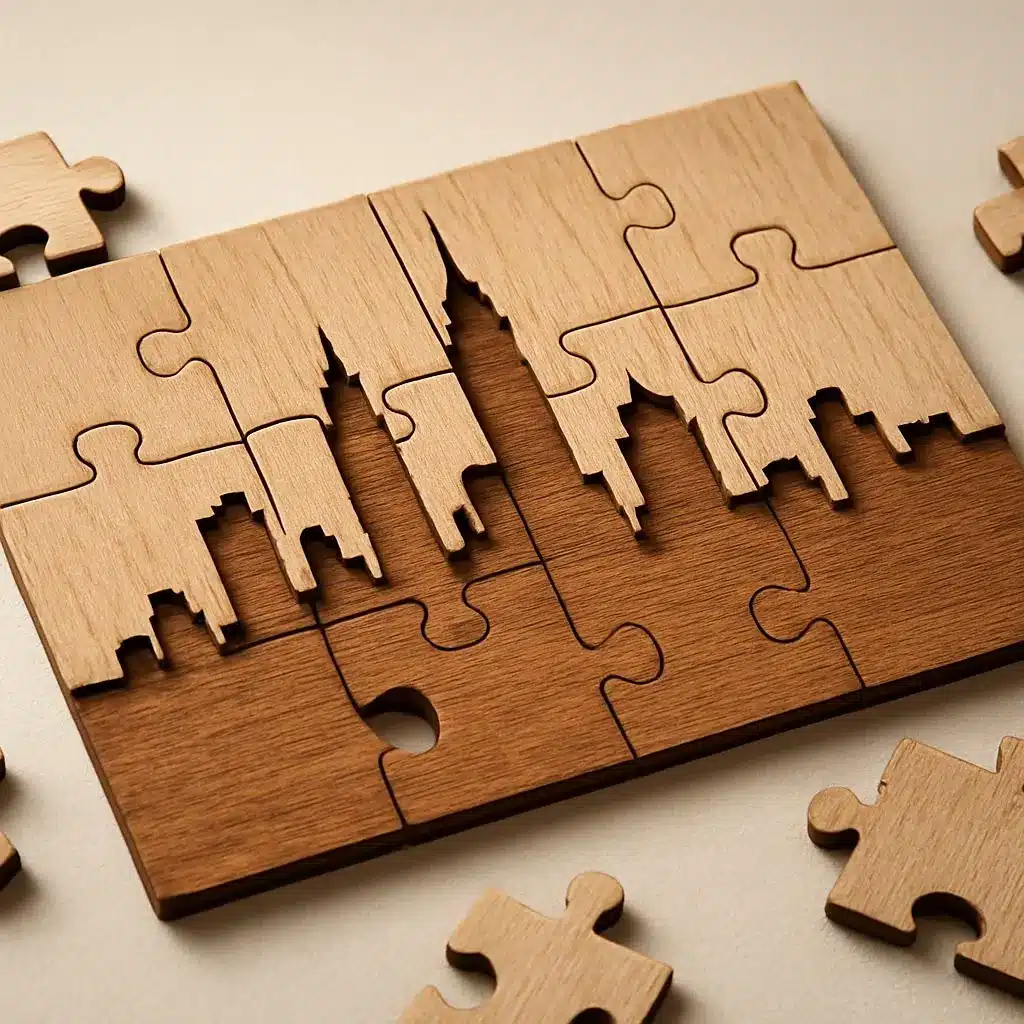
Whether you want a museum-quality wooden jigsaw of a Gothic cathedral, a laser-cut skyline puzzle, or a 3D printed model of a favorite landmark, knowing where to buy or how to commission these items will save time and money. This guide helps buyers compare established makers, niche shops, and custom fabricators; highlights typical costs and lead times; and gives a clear checklist for commissioning a custom skyline or landmark puzzle.
Where to buy finished architectural puzzles
Not all sellers are the same: mass-market brands, boutique woodworkers, and specialty puzzle houses serve different price points and expectations of quality. If you want to buy architectural puzzles, consider these channels:
- Specialty puzzle brands and studios — These companies focus on high-end materials (museum-board, kiln-dried hardwood, archival printing) and tight tolerances. Their production runs tend to be limited, and packaging and artwork are curated.
- Boutique laser-cut makers — Small studios often offer laser-cut MDF or plywood puzzles with very precise silhouettes and custom designs. They’re a good choice if you want clean skyline lines or bespoke piece shapes.
- 3D model shops and architectural model makers — For scale models and 3D landmark replicas, look for model-making studios that offer CAD-driven CNC or 3D print production. These sellers can produce display-grade pieces with painted surfaces or raw materials depending on your brief.
- Museum shops and curated retailers — Museum stores and specialty design shops often commission or curate puzzles featuring iconic architecture; the curatorial oversight usually means reliable reproduction and packaging.
- Artisan marketplaces — Platforms like Etsy host experienced makers who accept custom orders. Expect variability in finish and foundry practices; read reviews and request clear photos of completed work before ordering.
Commissioning custom puzzles and 3D landmarks: services to consider
If you need a truly custom skyline, a puzzle based on a private photograph, or a bespoke 3D landmark model for display or gifting, these are the common supplier types:
- Laser-cut studios — Fast for flat puzzles and affordable for small batches; good for skyline silhouettes and intricate edge pieces.
- Wood puzzle workshops — Offer hand-cut or machine-cut hardwood puzzles often with artisan finishing; expect higher costs but premium feel.
- CNC and model-making firms — Best for structurally accurate 3D models and multi-material assemblies; they handle CAD, prototyping, and finishing.
- 3D print bureaus — Offer flexible prototyping and small runs; choose post-processing carefully if you want a polished look.
Typical cost ranges and lead times
- Ready-made mass-market architectural puzzles: typically lower cost, fast shipping (days to 2 weeks).
- High-end wooden puzzles (artisan brands): moderate to premium pricing; expect $50–$300+ depending on size and materials; lead times often 2–6 weeks.
- Laser-cut custom flat puzzles: range widely — small custom orders $75–$250, larger or more complex jobs more; lead times 2–8 weeks depending on queue.
- Custom 3D models and scale replicas: prototype and finishing drive price. Small models can start in the low hundreds; detailed architectural models can run into the thousands. Allow 4–12 weeks for CAD, prototyping, and finishing.
These ranges are guidelines. Always request an itemized quote that separates design/CAD fees, prototyping, materials, printing/cutting, finishing, packaging, and shipping.
How to choose a supplier — ordering tips
- Ask about production methods and materials — Different methods (laser cut, die-cut, CNC, 3D print) affect look, strength, and price. Ask for samples or photos of previous work and for specific materials used (board thickness, wood species, print process). A useful primer on these choices can help guide which questions to ask: production methods and materials.
- Request reference photos and finished-item images — Real photos of finished puzzles and models are more informative than studio renderings.
- Confirm tolerances and piece fit — Good vendors will explain tolerances for cuts, edge finishing, and how pieces fit together; this matters for wooden puzzles in particular.
- Clarify rights and image sources — Provide source images you own or secure licensed photos; ask the maker how they handle copyrighted images.
- Ask about packaging and labeling — If the puzzle is a gift or retail item, request custom box art, insert cards, and archival-quality printing.
Checklist for commissioning a custom skyline or landmark puzzle
- Define the brief: desired scale, finished size, single-sided flat puzzle or 3D model, intended audience (kids, collectors), and overall visual aesthetic.
- Supply image assets: highest-resolution images or vector files; indicate key views or angles if this is a skyline montage.
- Specify material and finish: plywood, MDF, hardwood, museum board, or 3D print material; paint, varnish, or raw finish.
- Agree on piece count and complexity: number of pieces, custom piece shapes, inclusion of silhouette or whimsy pieces.
- Ask for a prototype or digital mockup: approve CAD files or a photographic mockup before production.
- Confirm packaging, instructions, and labeling: include box art, certificate of authenticity if relevant, and assembly help for 3D models.
- Negotiate timeline and payment milestones: deposit for design work, payment on prototype approval, balance before shipping.
- Clarify returns, defects policy, and shipping insurance: understand remedies for damage in transit or manufacturing faults.
Where to look for inspiration and examples
Before you commit, browse curated galleries and maker showcases to set expectations about quality, scale, and price. For a sense of common subjects and composition ideas, see lists of landmarks that are often available as puzzles. To evaluate finish levels across makers, consult examples from makers and sellers — look for consistent photography, clear descriptions of materials, and customer reviews.
Final tips
- Start with a small prototype if you plan a larger production run. Prototyping clarifies scale, color, and fit issues before costs escalate.
- Buy from sellers who publish clear materials lists and production photos. Transparency reduces surprises.
- If you’re commissioning a commercially sold design, discuss licensing terms up front.
If you follow these steps you’ll be better prepared to buy or commission an architectural puzzle or 3D model that matches your expectations for scale, finish, and durability. Whether you’re adding a collectible to a shelf, designing a museum gift, or ordering a one-off keepsake, a clear brief and the right vendor make all the difference.